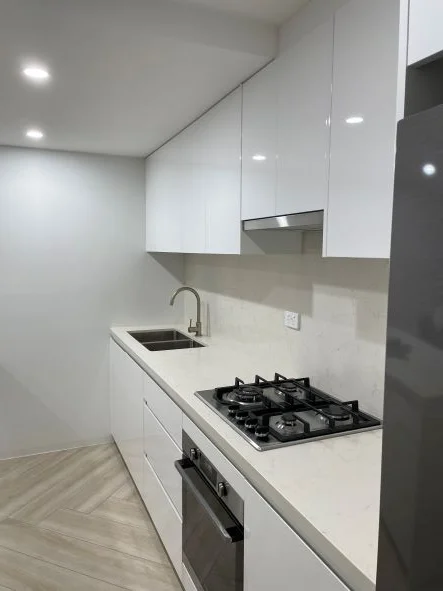
Bathroom Renovations Sydney: Design Trends That Will Dominate 2025
Stay Ahead with 2025’s Hottest Bathroom Trends
Our Sydney design specialists can help you incorporate the latest innovations into your bathroom renovation while ensuring timeless appeal and maximum functionality.
Emerging Sydney Bathroom Design Trends for 2025
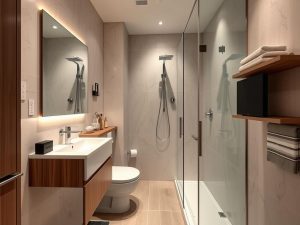
2025 bathrooms blend biophilic design with smart technology for a harmonious experience
Sydney’s bathroom design landscape is undergoing a significant transformation as we approach 2025, with several distinctive trends emerging that reflect both global influences and the unique Australian lifestyle. Understanding these forward-looking trends is crucial when planning your bathroom remodel to ensure your investment remains stylish and functional for years to come.
Aesthetic Directions
- Biophilic integration with living walls and natural ventilation
- Japandi fusion combining Scandinavian functionality with Japanese minimalism
- Curved architectural elements replacing harsh angles
- Statement ceiling treatments as the “fifth wall”
- Terrazzo 2.0 with oversized, colorful aggregate patterns
Technological Innovations
- Voice-activated fixtures and ambient controls
- Chromotherapy lighting systems for wellness benefits
- Digital showering experiences with personalized presets
- Self-cleaning toilets with advanced hygiene features
- Water usage monitoring through smartphone integration
Sydney’s climate and lifestyle significantly influence these emerging trends. The increasing focus on sustainability has driven innovations in water conservation technology, while the indoor-outdoor lifestyle has inspired designs that blur boundaries between nature and interior spaces. Wellness-focused features like aromatherapy diffusers and circadian lighting systems reflect the growing emphasis on bathrooms as self-care sanctuaries rather than purely functional spaces. These trends represent not just aesthetic shifts but fundamental changes in how Sydneysiders interact with their bathroom environments.
Smart Solutions for Small Sydney Bathrooms in 2025

2025 brings revolutionary space optimization techniques to compact Sydney bathrooms
Space constraints remain a significant challenge for many Sydney properties, particularly in inner-city apartments and heritage homes. The 2025 design landscape introduces innovative approaches to maximize functionality in compact bathrooms without compromising on style or comfort.
Next-Generation Storage
- Magnetic wall systems for customizable organization
- Hydraulic rising cabinets activated by touch
- Integrated Bunnings bathroom cabinet alternatives with smart technology
- Multifunctional laundry sink cabinet combinations
- Nano-coated open shelving resistant to moisture damage
Space-Maximizing Fixtures
- Expandable shower systems that fold when not in use
- Ultra-thin ceramic basins with concealed drainage
- Projection-mapped surfaces eliminating physical controls
- Compact toilet brush and toilet roll holder with antimicrobial properties
- Modular bathroom furniture adapting to changing needs
Optical Expansion Techniques
- Transparent materials creating visual continuity
- Programmable bathroom mirror mirrors with depth-enhancing lighting
- Micro-cement continuous surfaces eliminating visual breaks
- Bathroom mirror with LED light featuring virtual window effects
- Holographic wall treatments creating illusion of extended space
The 2025 approach to small bathroom design emphasizes multifunctionality and adaptability. Transformable elements that serve multiple purposes—such as shower walls that become illuminated media surfaces or vanities with built-in aromatherapy diffusers—maximize utility without increasing footprint. These innovations are particularly valuable for Sydney’s growing number of micro-apartments and compact living spaces where every square centimeter must work harder to deliver both functionality and aesthetic appeal.
2025-Ready Small Space Solutions
Our innovative design team specializes in bringing future-forward solutions to Sydney’s compact bathrooms. Discover how we can transform your small space with 2025’s most impactful trends.
2025 Bathroom Renovation Cost Projections for Sydney

Sydney bathroom renovation budget planning with 2025 materials and technology samples
Strategic budgeting for 2025’s innovative materials and technologies
Understanding projected bathroom renovation cost trends for 2025 is essential for Sydney homeowners planning future projects. While certain innovative materials and technologies will command premium prices, strategic planning can help balance cutting-edge design with financial considerations.
2025 Cost Tier Projections
Sydney bathroom renovation prices in 2025 are expected to stratify into distinct categories. Entry-level renovations ($15,000-$25,000) will incorporate basic smart features and sustainable materials. Mid-range transformations ($25,000-$40,000) will include advanced water conservation systems, programmable environments, and premium sustainable materials. Luxury renovations ($40,000-$60,000+) will feature fully integrated smart environments, bespoke sustainable solutions, and wellness technology suites. These projections reflect the increasing integration of technology and sustainability into standard bathroom features.
Investment Distribution
The allocation of renovation budgets will shift significantly by 2025. Technology integration will represent 15-20% of total costs, up from 5-10% in current renovations. Sustainable materials and systems will account for 25-30% of budgets. Labor costs will remain relatively stable at 35-40%, though specialized installation for advanced systems may command premium rates. Design and planning will increase to 10-15% of budgets, reflecting the more complex integration requirements of smart and sustainable systems. This redistribution highlights the changing priorities in bathroom renovations near me.
2025 Value Engineering: When planning your bathroom remodelling Sydney project for 2025, consider a modular approach to technology integration. Infrastructure-ready designs allow for phased implementation of smart features over time, reducing initial costs while ensuring future compatibility. Additionally, emerging subscription models for certain bathroom technologies may reduce upfront expenses while providing regular updates and maintenance, creating new cost structures for homeowners to consider.
Budget-Conscious 2025 Trend Implementation

Cost-effective Sydney bathroom featuring 2025 design elements with strategic high-impact upgrades
Achieving 2025’s premium look with strategic investment in key elements
Incorporating 2025’s cutting-edge bathroom trends doesn’t necessarily require a premium budget. With thoughtful planning and strategic investments, Sydney homeowners can achieve forward-looking designs that balance innovation with cost-effectiveness.
Smart Investment Strategies
High-Impact Focal Points
Rather than implementing expensive features throughout, create strategic impact zones. A single smart feature wall with programmable lighting costs approximately 60% less than full room implementation while delivering 80% of the visual impact. Investing in one statement element—such as a next-generation shower heads showers system or illuminated vanity zone—creates a future-forward impression without the comprehensive price tag. This focused approach delivers maximum design impact while maintaining budget control.
Phased Technology Integration
Consider infrastructure-ready approaches that allow for gradual technology implementation. Installing smart-ready plumbing and electrical systems during renovation costs only 15-20% more than standard installations but enables future technology upgrades without disruptive renovations. Many 2025 bathroom systems will offer modular components that can be added incrementally, allowing homeowners to spread investments over time while still benefiting from a cohesive design vision that anticipates future innovations.
Material Hybridization
Emerging manufacturing techniques will make hybrid materials more accessible by 2025. These materials combine premium aesthetics with cost-effective production methods. For example, advanced porcelain tiles that convincingly mimic rare natural stone will cost 70-80% less than genuine materials while offering superior performance characteristics. Similarly, composite bathtubs soaking vessels will deliver the aesthetic and tactile experience of custom stone at approximately half the price.
DIY-friendly aspects of 2025 bathroom technology will include plug-and-play smart accessories, modular storage systems with tool-free installation, and self-calibrating fixtures that eliminate the need for professional fine-tuning. However, core infrastructure elements like advanced water recycling systems, integrated technology hubs, and precision waterproofing for new materials will still require professional expertise to ensure proper functionality and compliance with evolving Sydney building codes.
Sustainable Materials Trending for 2025 Sydney Bathrooms

Eco-friendly bathroom materials for 2025 Sydney renovations featuring recycled and sustainable options
2025’s most innovative sustainable materials balance eco-consciousness with performance
Sustainability will move from optional to essential in 2025 Sydney bathroom design, with innovative eco-friendly materials offering unprecedented performance while addressing environmental concerns. These materials are specifically engineered to withstand Sydney’s unique climate challenges while reducing environmental impact.
| Material Category | 2025 Innovations | Environmental Benefits | Performance in Sydney Climate |
| Surfaces | Bio-composite panels, regenerative ceramics, carbon-negative concrete alternatives | Carbon sequestration, zero-waste manufacturing, cradle-to-cradle lifecycle | Superior humidity resistance, thermal regulation properties, salt air tolerance |
| Fixtures | Recycled metal alloys, bio-based composites, repurposed industrial waste | Circular economy support, reduced mining impact, industrial waste diversion | Enhanced corrosion resistance, UV stability, reduced thermal conductivity |
| Cabinetry | Mycelium composites, agricultural waste panels, ocean plastic composites | Carbon neutrality, agricultural waste utilization, ocean plastic reduction | Natural mold resistance, dimensional stability in humidity, waterproof without chemical treatments |
| Waterproofing | Plant-based membranes, crystalline technology, self-healing bio-compounds | VOC elimination, reduced petrochemical dependence, biodegradability | Enhanced vapor management, extreme temperature tolerance, increased longevity in coastal conditions |
The 2025 approach to bathroom materials will emphasize complete lifecycle consideration. Materials will be selected not just for their immediate performance and aesthetics but for their entire environmental footprint—from sourcing and manufacturing to eventual recycling or biodegradation. Sydney’s proximity to marine environments makes this particularly important, as innovative materials will offer enhanced protection against salt air corrosion and humidity while minimizing microplastic shedding and harmful chemical leaching that could impact waterways and ocean ecosystems.
Future-Proof Your Bathroom with Sustainable Innovation
Our material specialists can guide you through 2025’s most promising sustainable options, selecting the perfect combinations for your Sydney bathroom’s specific conditions and your environmental priorities.
2025 Layout Innovations for Maximum Functionality

Innovative bathroom layout design for 2025 Sydney homes with adaptive zones and flexible spaces
Adaptive zoning creates bathrooms that respond to changing daily needs
Bathroom layout design will undergo a fundamental shift by 2025, moving from static arrangements to dynamic, responsive spaces that adapt to different users and functions. These innovative approaches maximize functionality while creating more personalized experiences in bathroom remodel Sydney projects.
Adaptive Zoning Concepts
- Transformable spaces with movable partition systems
- Multi-user configurations that adapt to household patterns
- Activity-based zones replacing fixture-based planning
- Circadian-responsive environments that change throughout the day
- Wellness-focused layouts integrating dedicated relaxation areas
Future-Forward Space Planning
- Centralized technology hubs controlling integrated systems
- Dedicated charging and device stations for personal electronics
- Transitional spaces blending bathroom and dressing functions
- Micro-retreat areas for personal wellness routines
- Universal design elements integrated seamlessly into aesthetics
The 2025 approach to bathroom layout will emphasize personalization through technology rather than permanent structural elements. Programmable environments will allow the same physical space to adapt to different users’ preferences for lighting, temperature, acoustic properties, and even scent. This represents a significant shift from traditional bathroom renovations that require physical modifications to accommodate changing needs. For Sydney’s diverse households, these adaptable environments will provide customized experiences without requiring separate bathrooms for different family members.
Illuminating 2025: Next-Generation Bathroom Lighting

Advanced bathroom lighting systems for 2025 featuring circadian rhythms and therapeutic elements
Biologically responsive lighting systems enhance wellbeing while providing perfect illumination
Lighting design will transcend basic illumination by 2025, becoming an integral element of bathroom wellness and functionality. Sydney’s abundant natural light will be complemented by sophisticated artificial systems that support health, enhance experiences, and transform spaces throughout the day.
Biologically Responsive Systems
- Circadian-matching illumination supporting sleep cycles
- Dawn simulation features for natural awakening
- Melanopic light calibration for wellbeing
- Seasonal affective disorder (SAD) compensation
- Personalized light prescriptions via biometric feedback
Immersive Light Experiences
- Chromotherapy programs for mood enhancement
- Projection mapping on bathroom surfaces
- Virtual skylights with time-synchronized natural light
- Simulated outdoor environments through light and sound
- Therapeutic light sequences for stress reduction
Intelligent Integration
- Occupancy-learning systems that anticipate preferences
- Task-specific lighting that activates contextually
- Energy harvesting illumination reducing power consumption
- Seamless transitions between natural and artificial light
- Intuitive gesture and voice control eliminating switches
“By 2025, bathroom lighting will be recognized not just as an aesthetic element but as a critical component of home wellness infrastructure, with measurable benefits for physical and mental health.”
The technical specifications for 2025 bathroom lighting will emphasize full-spectrum LED systems with unprecedented color rendering capabilities (CRI 97+) and dynamic color temperature ranges (1800K-6500K). These systems will integrate with home wellness platforms to synchronize with residents’ circadian rhythms and health goals. For Sydney’s indoor-outdoor lifestyle, lighting will seamlessly transition between natural and artificial sources throughout the day, with sensors continuously optimizing light quality based on available daylight, time, weather conditions, and user activities.
Early Adopters: 2025 Trends Already Transforming Sydney Bathrooms
“We incorporated several 2025 trends into our Mosman home renovation last month—particularly the biophilic elements and circadian lighting system. The difference in how we feel using the space is remarkable. Our designer from ANE Constructions recommended materials that weren’t just sustainable but actually perform better in our beachside location. The bathroom has become our home’s wellness center rather than just a functional space.”
— Alexandra K., Mosman
“Our Parramatta apartment bathroom was tiny and outdated. ANE suggested several 2025 space-optimization techniques that have completely transformed how the room functions. The adaptive storage solutions and multifunctional fixtures make the space feel twice as large. They also installed infrastructure for future smart upgrades, so we can add new technology gradually as our budget allows. Brilliant forward-thinking approach.”
— Michael T., Parramatta
“We were concerned about investing in trends that might quickly become outdated, but ANE’s approach to our Cronulla bathroom renovation focused on timeless elements with adaptable technology integration. They used several 2025 material innovations that are performing exceptionally well in our coastal environment. The bathroom feels contemporary yet classic, and the sustainable systems have already reduced our water consumption by 40%.”
— Sarah and James L., Cronulla
Embracing 2025: Your Sydney Bathroom Transformation Journey
As we’ve explored, the bathroom renovations Sydney landscape of 2025 will be defined by the seamless integration of sustainability, technology, wellness, and personalization. These emerging trends represent not just aesthetic shifts but fundamental changes in how bathrooms function and contribute to overall wellbeing. By thoughtfully incorporating these forward-looking elements—from biophilic design and adaptive layouts to smart technology and circadian lighting—Sydney homeowners can create spaces that remain relevant and enhancing for years to come.
The key to successful bathroom remodelling Sydney projects that embrace 2025 trends lies in balancing innovation with timelessness. Working with experienced professionals who understand both current capabilities and emerging possibilities ensures your renovation will be both contemporary and enduring. Whether you’re planning a complete transformation or strategically updating key elements, a future-focused approach delivers maximum long-term value while creating a space that enhances daily life through thoughtful design and functionality.
Create Your 2025-Ready Bathroom Today
Our Sydney design specialists stay at the forefront of emerging bathroom trends, bringing tomorrow’s innovations to today’s renovations. Let us help you create a space that’s both cutting-edge and timeless.
Frequently Asked Questions About 2025 Bathroom Trends
Which 2025 bathroom technologies offer the best return on investment?
The highest ROI bathroom technologies for 2025 will be water management systems, smart mirrors with health monitoring capabilities, and integrated wellness features. Water reclamation and precision usage systems typically recover their costs within 3-5 years through reduced utility bills, while also appealing to environmentally conscious buyers. Smart mirrors with health monitoring functions combine daily use with preventative healthcare, a growing priority for homebuyers. Wellness features like chromotherapy lighting and aromatherapy integration add relatively low-cost luxury that significantly enhances perceived value. For Sydney properties, technologies that address water conservation while enhancing the user experience will command the greatest premium in resale scenarios.
How can I implement 2025 trends in my bathroom renovation without a complete overhaul?
To incorporate 2025 trends without a complete renovation, focus on modular and surface upgrades. Replace standard mirrors with smart versions featuring integrated lighting and minimal technology features (0-,500). Upgrade to programmable shower systems that can retrofit existing plumbing (
Frequently Asked Questions About 2025 Bathroom Trends
Which 2025 bathroom technologies offer the best return on investment?
The highest ROI bathroom technologies for 2025 will be water management systems, smart mirrors with health monitoring capabilities, and integrated wellness features. Water reclamation and precision usage systems typically recover their costs within 3-5 years through reduced utility bills, while also appealing to environmentally conscious buyers. Smart mirrors with health monitoring functions combine daily use with preventative healthcare, a growing priority for homebuyers. Wellness features like chromotherapy lighting and aromatherapy integration add relatively low-cost luxury that significantly enhances perceived value. For Sydney properties, technologies that address water conservation while enhancing the user experience will command the greatest premium in resale scenarios.
How can I implement 2025 trends in my bathroom renovation without a complete overhaul?
To incorporate 2025 trends without a complete renovation, focus on modular and surface upgrades. Replace standard mirrors with smart versions featuring integrated lighting and minimal technology features ($800-$2,500). Upgrade to programmable shower systems that can retrofit existing plumbing ($1,200-$3,000). Install circadian lighting systems using existing wiring ($600-$1,500). Add plug-and-play wellness elements like aromatherapy diffusers or chromotherapy devices ($300-$900). Update hardware and fixtures with sustainable materials and water-saving features ($500-$1,500). Consider micro-cement overlays for existing surfaces rather than replacement ($2,000-$4,000). These strategic upgrades deliver significant impact while avoiding the cost and disruption of structural changes.
What are the most future-proof materials for Sydney bathroom renovations?
The most future-proof materials for Sydney bathrooms combine sustainability with performance in coastal conditions. Engineered quartz and porcelain with enhanced properties offer exceptional durability and design flexibility while resisting humidity and salt air. Bio-based composites derived from agricultural waste provide sustainability credentials with superior moisture resistance. Advanced ceramics with self-cleaning nanotechnology reduce maintenance while improving hygiene. For coastal properties, marine-grade stainless steel (316 grade) or PVD-coated fixtures resist corrosion. Terrazzo made with recycled glass and low-carbon cement offers sustainability with timeless appeal. These materials balance immediate performance needs with the growing demand for environmentally responsible choices, ensuring both physical longevity and market relevance as sustainability becomes increasingly valued.
How will 2025 bathroom trends accommodate aging-in-place needs?
The 2025 approach to aging-in-place design will seamlessly integrate accessibility with luxury and technology. Adaptive environments will feature voice-activated controls eliminating the need for physical interaction with fixtures. Programmable height-adjustable elements will accommodate different users without obvious accessibility features. Fall detection and health monitoring systems will be discreetly integrated into regular bathroom elements like mirrors and flooring. Slip-resistant surfaces will utilize new materials indistinguishable from premium finishes. Thermoregulation systems will maintain comfortable temperatures for sensitive individuals. These innovations will create bathrooms that adapt to changing needs without stigmatizing aesthetics, supporting independence while maintaining style—a significant evolution from current accessibility approaches that often sacrifice design for functionality.
,200-,000). Install circadian lighting systems using existing wiring (0-
Frequently Asked Questions About 2025 Bathroom Trends
Which 2025 bathroom technologies offer the best return on investment?
The highest ROI bathroom technologies for 2025 will be water management systems, smart mirrors with health monitoring capabilities, and integrated wellness features. Water reclamation and precision usage systems typically recover their costs within 3-5 years through reduced utility bills, while also appealing to environmentally conscious buyers. Smart mirrors with health monitoring functions combine daily use with preventative healthcare, a growing priority for homebuyers. Wellness features like chromotherapy lighting and aromatherapy integration add relatively low-cost luxury that significantly enhances perceived value. For Sydney properties, technologies that address water conservation while enhancing the user experience will command the greatest premium in resale scenarios.
How can I implement 2025 trends in my bathroom renovation without a complete overhaul?
To incorporate 2025 trends without a complete renovation, focus on modular and surface upgrades. Replace standard mirrors with smart versions featuring integrated lighting and minimal technology features ($800-$2,500). Upgrade to programmable shower systems that can retrofit existing plumbing ($1,200-$3,000). Install circadian lighting systems using existing wiring ($600-$1,500). Add plug-and-play wellness elements like aromatherapy diffusers or chromotherapy devices ($300-$900). Update hardware and fixtures with sustainable materials and water-saving features ($500-$1,500). Consider micro-cement overlays for existing surfaces rather than replacement ($2,000-$4,000). These strategic upgrades deliver significant impact while avoiding the cost and disruption of structural changes.
What are the most future-proof materials for Sydney bathroom renovations?
The most future-proof materials for Sydney bathrooms combine sustainability with performance in coastal conditions. Engineered quartz and porcelain with enhanced properties offer exceptional durability and design flexibility while resisting humidity and salt air. Bio-based composites derived from agricultural waste provide sustainability credentials with superior moisture resistance. Advanced ceramics with self-cleaning nanotechnology reduce maintenance while improving hygiene. For coastal properties, marine-grade stainless steel (316 grade) or PVD-coated fixtures resist corrosion. Terrazzo made with recycled glass and low-carbon cement offers sustainability with timeless appeal. These materials balance immediate performance needs with the growing demand for environmentally responsible choices, ensuring both physical longevity and market relevance as sustainability becomes increasingly valued.
How will 2025 bathroom trends accommodate aging-in-place needs?
The 2025 approach to aging-in-place design will seamlessly integrate accessibility with luxury and technology. Adaptive environments will feature voice-activated controls eliminating the need for physical interaction with fixtures. Programmable height-adjustable elements will accommodate different users without obvious accessibility features. Fall detection and health monitoring systems will be discreetly integrated into regular bathroom elements like mirrors and flooring. Slip-resistant surfaces will utilize new materials indistinguishable from premium finishes. Thermoregulation systems will maintain comfortable temperatures for sensitive individuals. These innovations will create bathrooms that adapt to changing needs without stigmatizing aesthetics, supporting independence while maintaining style—a significant evolution from current accessibility approaches that often sacrifice design for functionality.
,500). Add plug-and-play wellness elements like aromatherapy diffusers or chromotherapy devices (0-0). Update hardware and fixtures with sustainable materials and water-saving features (0-
Frequently Asked Questions About 2025 Bathroom Trends
Which 2025 bathroom technologies offer the best return on investment?
The highest ROI bathroom technologies for 2025 will be water management systems, smart mirrors with health monitoring capabilities, and integrated wellness features. Water reclamation and precision usage systems typically recover their costs within 3-5 years through reduced utility bills, while also appealing to environmentally conscious buyers. Smart mirrors with health monitoring functions combine daily use with preventative healthcare, a growing priority for homebuyers. Wellness features like chromotherapy lighting and aromatherapy integration add relatively low-cost luxury that significantly enhances perceived value. For Sydney properties, technologies that address water conservation while enhancing the user experience will command the greatest premium in resale scenarios.
How can I implement 2025 trends in my bathroom renovation without a complete overhaul?
To incorporate 2025 trends without a complete renovation, focus on modular and surface upgrades. Replace standard mirrors with smart versions featuring integrated lighting and minimal technology features ($800-$2,500). Upgrade to programmable shower systems that can retrofit existing plumbing ($1,200-$3,000). Install circadian lighting systems using existing wiring ($600-$1,500). Add plug-and-play wellness elements like aromatherapy diffusers or chromotherapy devices ($300-$900). Update hardware and fixtures with sustainable materials and water-saving features ($500-$1,500). Consider micro-cement overlays for existing surfaces rather than replacement ($2,000-$4,000). These strategic upgrades deliver significant impact while avoiding the cost and disruption of structural changes.
What are the most future-proof materials for Sydney bathroom renovations?
The most future-proof materials for Sydney bathrooms combine sustainability with performance in coastal conditions. Engineered quartz and porcelain with enhanced properties offer exceptional durability and design flexibility while resisting humidity and salt air. Bio-based composites derived from agricultural waste provide sustainability credentials with superior moisture resistance. Advanced ceramics with self-cleaning nanotechnology reduce maintenance while improving hygiene. For coastal properties, marine-grade stainless steel (316 grade) or PVD-coated fixtures resist corrosion. Terrazzo made with recycled glass and low-carbon cement offers sustainability with timeless appeal. These materials balance immediate performance needs with the growing demand for environmentally responsible choices, ensuring both physical longevity and market relevance as sustainability becomes increasingly valued.
How will 2025 bathroom trends accommodate aging-in-place needs?
The 2025 approach to aging-in-place design will seamlessly integrate accessibility with luxury and technology. Adaptive environments will feature voice-activated controls eliminating the need for physical interaction with fixtures. Programmable height-adjustable elements will accommodate different users without obvious accessibility features. Fall detection and health monitoring systems will be discreetly integrated into regular bathroom elements like mirrors and flooring. Slip-resistant surfaces will utilize new materials indistinguishable from premium finishes. Thermoregulation systems will maintain comfortable temperatures for sensitive individuals. These innovations will create bathrooms that adapt to changing needs without stigmatizing aesthetics, supporting independence while maintaining style—a significant evolution from current accessibility approaches that often sacrifice design for functionality.
,500). Consider micro-cement overlays for existing surfaces rather than replacement (,000-,000). These strategic upgrades deliver significant impact while avoiding the cost and disruption of structural changes.
What are the most future-proof materials for Sydney bathroom renovations?
The most future-proof materials for Sydney bathrooms combine sustainability with performance in coastal conditions. Engineered quartz and porcelain with enhanced properties offer exceptional durability and design flexibility while resisting humidity and salt air. Bio-based composites derived from agricultural waste provide sustainability credentials with superior moisture resistance. Advanced ceramics with self-cleaning nanotechnology reduce maintenance while improving hygiene. For coastal properties, marine-grade stainless steel (316 grade) or PVD-coated fixtures resist corrosion. Terrazzo made with recycled glass and low-carbon cement offers sustainability with timeless appeal. These materials balance immediate performance needs with the growing demand for environmentally responsible choices, ensuring both physical longevity and market relevance as sustainability becomes increasingly valued.
How will 2025 bathroom trends accommodate aging-in-place needs?
The 2025 approach to aging-in-place design will seamlessly integrate accessibility with luxury and technology. Adaptive environments will feature voice-activated controls eliminating the need for physical interaction with fixtures. Programmable height-adjustable elements will accommodate different users without obvious accessibility features. Fall detection and health monitoring systems will be discreetly integrated into regular bathroom elements like mirrors and flooring. Slip-resistant surfaces will utilize new materials indistinguishable from premium finishes. Thermoregulation systems will maintain comfortable temperatures for sensitive individuals. These innovations will create bathrooms that adapt to changing needs without stigmatizing aesthetics, supporting independence while maintaining style—a significant evolution from current accessibility approaches that often sacrifice design for functionality.