How to Choose the Right Tiles for your Bathroom Renovation
Embarking on a bathroom renovation is an exciting journey that can transform one of the most important spaces in your home. At the centre of this transformation lies the very important and potentially overwhelming decision of selecting the perfect tiles.
The right tiles can elevate your bathroom’s appeal, style, functionality and overall value. This comprehensive guide provides an overview of considerations for making an informed tile selection to transform your bathroom into a space that you will love for years to come.
How do your needs impact tile selection?
The tiles you choose need to withstand the requirements of a bathroom environment and conditions while maintaining beauty and structure. The main considerations relate to exposure to unique challenges like humidity, moisture, temperature changes and water splashes.
Key Considerations for bathroom tiles
- Water resistance: This is of most importance. Bathroom tiles need to repel water and resist moisture absorption to prevent damage, mould growth and structural issues.
- Slip resistance: Safety is crucial in a wet environment. Help prevent accidents with textured tiles or slip-resistance properties.
- Durability: Bathroom tiles should be able to withstand daily wear and tear, cleaning products and potential impacts.
- Maintenance: Consider how easy the tiles are to clean and maintain over time.
Material matters
The first step in your tile selection process is understanding the various materials that are available. The following summary provides an overview of the unique characteristics, benefits and challenges of each type of tile.
Ceramic tiles
Why choose ceramic tiles
Affordable.
Wide range of colours, textures and designs.
Easy to clean.
Excellent moisture and water resistance.
Reasonable durability for moderate-use areas.
Suitable for walls and floors.
Wide range of colours and patterns.
Things to be aware of
Can be cold to the touch.
Less durable than some other options.
May chip or crack under heavy impact.
Less water-resistant than porcelain (but still suitable for bathrooms).
Porcelain tiles
A more advanced version of ceramic tiles, porcelain offers enhanced performance and a premium option for bathrooms.
Why choose porcelain tiles
Extremely dense and water-resistant.
Higher durability.
Less porous.
Can resemble natural stone or wood.
Suitable for high-traffic areas, walls and floors.
Ideal for high-moisture areas like shower floors.
Things to be aware of
More expensive than standard ceramic.
Heavier and harder to cut.
Requires professional installation.
Natural stone tiles
If you are looking for a luxurious, unique look, natural stone offers exceptional beauty. Natural stone tiles include marble, travertine, slate and granite.
Why choose natural stone tiles
Each tile is completely unique creating a high-end look.
Adds significant value to your home.
Adds texture and character to the bathroom.
Available in a variety of finishes (polished, honed, tumbled).
Things to be aware of
Requires sealing to prevent stains and moisture absorption.
Can be expensive and high-maintenance.
Some stones are more porous and prone to damage.
Glass tiles
A modern and sleek option that can create stunning visual effects.
Why choose glass tiles
Reflects light, making small bathrooms feel bigger.
Resistant to mould and mildew.
Comes in vibrant colours and finishes for a modern look.
Easy to clean.
Things to be aware of
Can be slippery, making them unsuitable for floors.
Prone to scratches and visible fingerprints.
Can be expensive.
Mosaic tiles
Mosaic adds creativity, interest and visual effects.
Why choose mosaic tiles
Adds decorative detail to walls, shower niches, and feature areas.
Available in various materials, including glass, stone, and ceramic.
Small size allows for creative patterns.
Things to be aware of
More grout lines mean more cleaning and maintenance.
Can be expensive compared to standard tiles.
Functionality and safety
Bathrooms are high-moisture environments, so water absorption is critical. Porcelain tiles have the lowest water absorption rate. Select tiles with less than 0.5% water absorption for wet areas and keep in mind that glazed tiles offer additional water protection. Higher traffic areas require more durable and robust tile options and floors need the greatest consideration for safety and slip resistance.
The area of the bathroom will determine the most suitable characteristics.
Floors
Floor tiles need higher durability and safety consideration.
Textured surfaces provide better grip and matte finishes offer more traction than glossy ones. Consider smaller tiles with more grout lines for increased slip resistance.
Recommended materials
Porcelain, textured ceramic, or natural stone with slip-resistant properties.
Size considerations
Larger tiles mean fewer grout lines, which can make cleaning easier.
Slip resistance
Look for tiles with a higher coefficient of friction (COF), which determines how slippery a tile surface is under both dry and wet conditions.
Walls
Wall tiles can be more decorative and offer more design flexibility.
Recommended materials
Ceramic, porcelain, glass.
Design tips
Consider creating accent walls or using decorative patterns.
Height
Full-height tiling can make a bathroom feel more luxurious.
Showers
Shower tiles must be extremely water-resistant and durable. Avoid porous natural stones in shower areas without proper sealing.
Recommended materials
Porcelain, glass, small format tiles for better slope and water drainage.
Grout considerations
Use epoxy grout for better water resistance.
Design options
Consider creating visual interest with different tile layouts or mosaic designs.
Design elements for a beautiful bathroom
Colour, pattern, size and layout patterns will contribute greatly to the overall aesthetics and visual appeal of your renovated bathroom. The following tips may assist you in your selections process.

Practical tips for tile selection
- Sample first: Request tile samples and view them in your bathroom’s lighting.
- Consider grout colour: It can dramatically affect the overall look.
- Budget wisely: Balance quality and needs with cost.
- Think long-term: Choose timeless designs over trendy options.
- Professional consultation: Consider consulting a design professional.
How to consider design elements in your tile selection
Tile size
Tile size will have a big impact on the overall look and feel of your bathroom and can dramatically impact your bathroom’s perception. Consider your bathroom size in your decisions.
Large tiles
Why choose large tiles
To create a sense of spaciousness. They work well in larger bathrooms.
To create a cleaner, more modern look by using fewer grout lines.
For lower maintenance due to less grout to clean.
Things to be aware of
Can be difficult to install in small or awkward spaces.
Requires a level substrate for proper installation.
Medium tiles
Why choose medium tiles
For versatility because they work for both small and large bathrooms.
To balance both a modern and classic look.
For ease of handling and installation.
Things to be aware of
Can be basic and lack interest.
Small tiles
Why choose small tiles
To create visual interest to walls and floors for example, mosaics and subway tiles.
For better slip resistance due to more grout lines so good option for floors.
For suitability to smaller spaces such as shower niches and feature walls.
Things to be aware of
Higher maintenance due to more grout lines.
Can make a space look busy if overused.
Colour and pattern selection
The colour and pattern of your tiles set the tone for the entire bathroom and can dramatically change the overall look and feel.
Light tiles
Why choose light tiles
Makes small bathrooms look and feel bigger and brighter.
Creates a fresh, clean feel.
Things to be aware of
Can show dirt and stains more easily.
Dark tiles
Why choose dark tiles
Adds a luxurious, dramatic and sophisticated look.
Hides stains and water marks better.
Things to be aware of
Can make small bathrooms feel more enclosed.
Patterned tiles
Why choose patterned tiles
Adds personality and visual interest.
To create feature walls and statement floors.
Things to be aware of
Can be overwhelming if overused.
May go out of style faster than neutral tiles.
Tips for colour and pattern selection
- Consider the overall colour scheme of your bathroom and relationship to the colour scheme of other areas of your home.
- Use accent tiles to create visual interest and sophistication.
- Mix and match tile sizes and patterns for depth and interest.
Tips for grout colour selection
Grout colour can enhance or diminish the look of your tiles.
- Matching grout (same colour as tiles) – creates a seamless look.
- Contrasting grout (darker or lighter than the tiles) – makes the tile pattern stand out.
- Neutral grout (light grey, beige, or white) – provides a balanced, timeless look.
Selecting the right layout and installation patterns
The way tiles are laid can transform their appearance and the overall appearance of the bathroom. Consider grout colour as part of the design. Matching or contrasting grout can change the entire look.
Straight Layout (Grid Pattern)
A classic and simple look
Works well with large-format and minimalist tiles
Brick Bond (Offset Pattern)
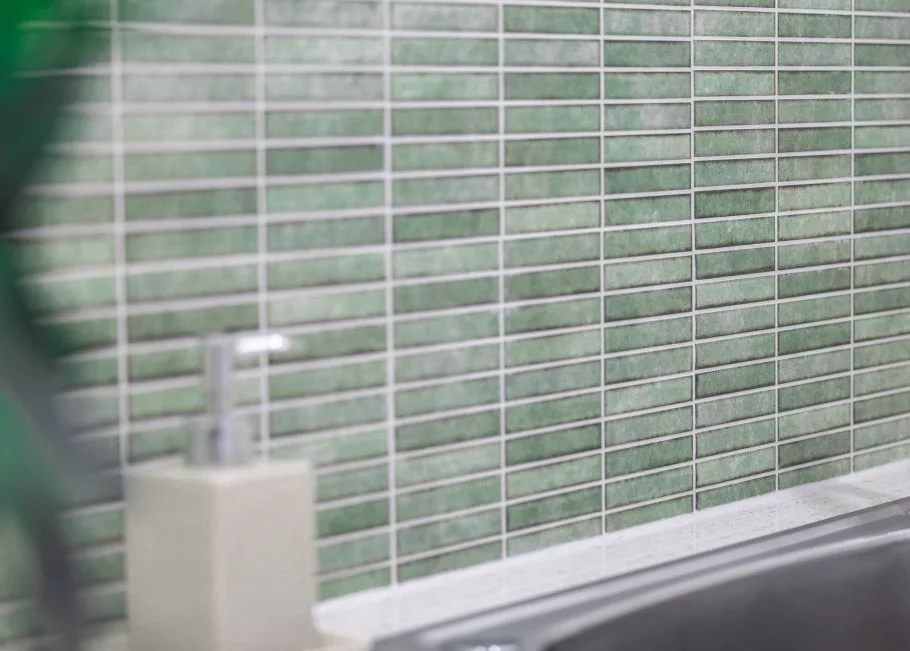
Creates a classic, timeless, subway-tile effect
Helps break up long, narrow spaces
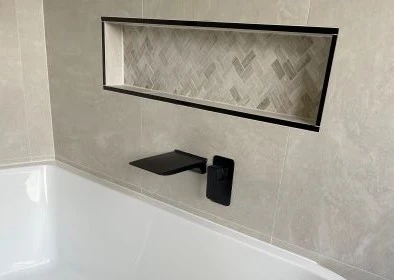
Herringbone or Chevron
Adds a high-end, decorative touch
Works well in feature walls and shower areas
Diagonal Layout
Makes small bathrooms feel wider
Adds a unique twist to standard tile layouts
Budgeting for tiles
Tile prices vary significantly so consider your overall budget and prioritise according to your design and functional needs.
- Budget-friendly: Ceramic tiles
- Mid-range: Porcelain tiles
- High-end: Natural stone and designer tiles
Tile maintenance and long-term care
There is something special about a transformed, shiny and clean bathroom. The following tips will help to keep tiles looking good for a long time.
- Appropriate cleaning products: Avoid abrasive cleaning materials. Test a small patch first if you are unsure. Ceramic and porcelain are easy to clean with standard bathroom cleaners. Natural stone requires specialised stone cleaners
- Sealing: Seal natural stone tiles annually.
- Grout cleaning: Clean grout regularly to prevent mould and mildew.
Final tips
- Always purchase 10-15% more tiles than your measured area to account for cuts and potential replacements.
- Order tiles from the same batch to ensure colour consistency.
- Request samples and view them in your bathroom’s lighting.
- Long-term design planning – choose timeless designs that are less likely to date.
Your perfect bathroom awaits!
Choosing the right tiles is a balance of practicality, personal style, and long-term value. Take your time, do your research, and don’t be afraid to seek professional advice. Your perfect bathroom is not just about looking good – it’s about creating a space that feels right for you.
Remember, the best tile choice is one that makes you happy every time you walk into your bathroom.
Ready to Get Started?
If you’re planning a bathroom renovation, ANE Constructions can offer you expert advice and a high-quality installation. Contact us today to get started on your dream bathroom!
Looking for a tile supplier in sydney?
Our tile trade supplier is Beaumont Tiles, Casula. Visit their website or drop in and chat with the team about your tile selection needs.